Using check-ins well
Same opener, every week. Kids settle faster when sessions start the same way. Using one check-in for several weeks also lets you compare answers over time.
Curious, not corrective. There are no wrong answers. If a child colors "happy" black, ask about it. Don't fix it.
Don't diagnose from drawings. A drawing is a conversation starter, not a test. Let the child tell you what it means.
Ask before you share. "Is it okay if I show this to your mom?" builds trust and teaches kids their feelings belong to them.
Keep it short. A check-in is 5–10 minutes. If it opens something big, that becomes the session.
Save them. Dated check-ins in the chart are a simple way to show progress to parents and in your notes.
Ages 4–9 · 5–10 minutes · Crayons or markers · Prints in black and white
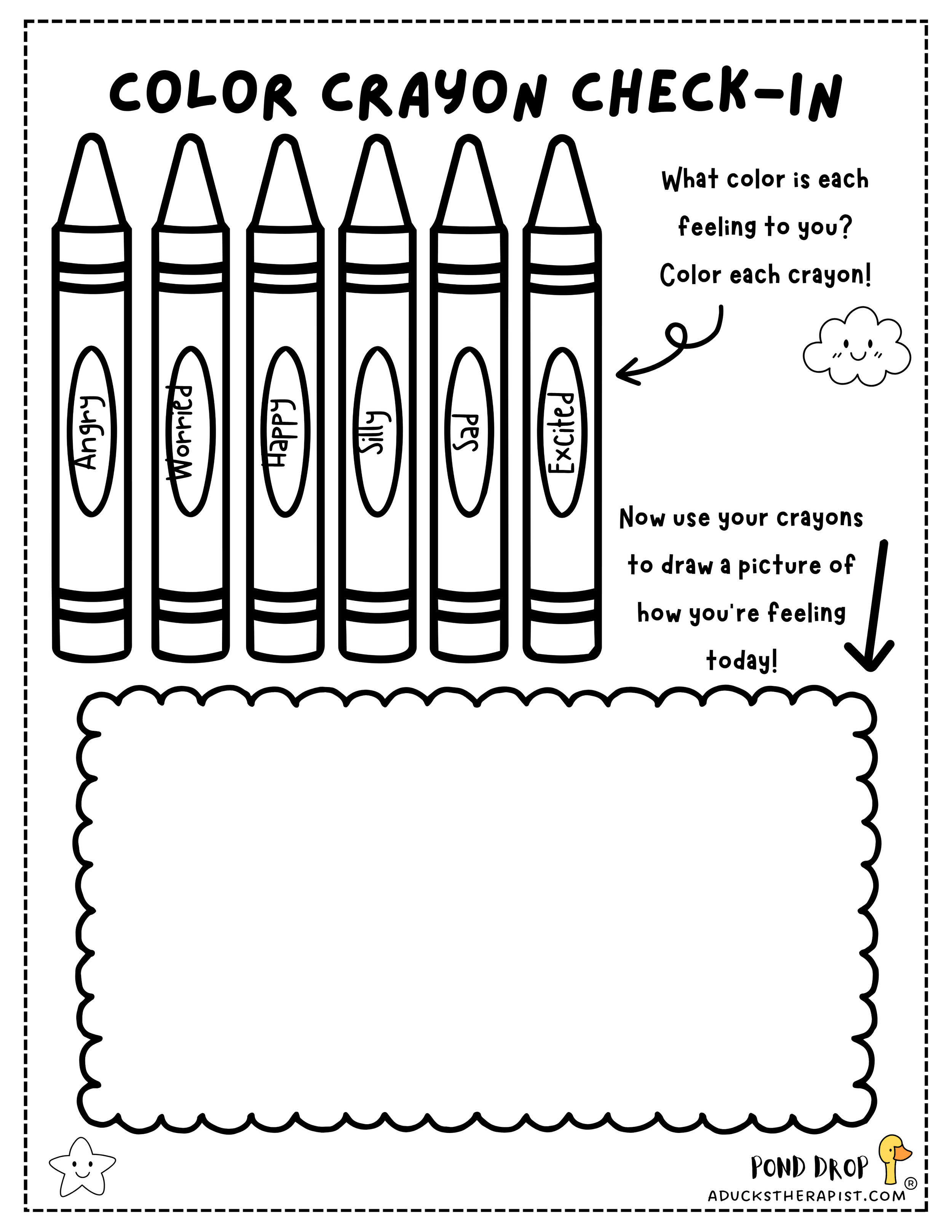
Kids choose a color for six feelings (angry, worried, happy, silly, sad, excited), then use those colors to draw how they feel today.
Why it works: Color gives kids a way into feelings before they have the words. Picking a color for each feeling is a small act of naming it, and drawing with those colors lets the child show a mix of feelings without having to explain them. This draws on expressive arts approaches, where making something comes before talking about it.
How to use it
Read the six feelings together. For pre-readers, act each one out.
Let the child pick a color for each. There's no right color.
Invite them to draw how they feel today using those colors.
Ask them to tell you about the picture.
Follow-up questions
"Why did you pick that color for worried?"
"I see a lot of [color] in your picture. Which feeling is that?"
"Which feeling is the biggest today? Which is the smallest?"
"If your picture had a title, what would it be?"
Adapting it
Little Ducks (4–5): Use only happy, sad, and angry, and you hold the words.
Big Ducks (8–9): Swap in bigger words like frustrated, disappointed, or proud, or add a blank crayon for their own feeling.
Extend it
Keep the color key and reuse it for a month to see how the drawing changes.
Make a feelings rainbow on the wall with each child's colors.
Pair with the Feelings Pictionary cards: draw the feeling only in its color.